Ramveer Tanwar left his engineering career to restore forgotten ponds across India. Through the Jal Chaupal movement, he has revived 96+ water bodies across 7 states — and built a community of 500+ volunteers fighting for water security.
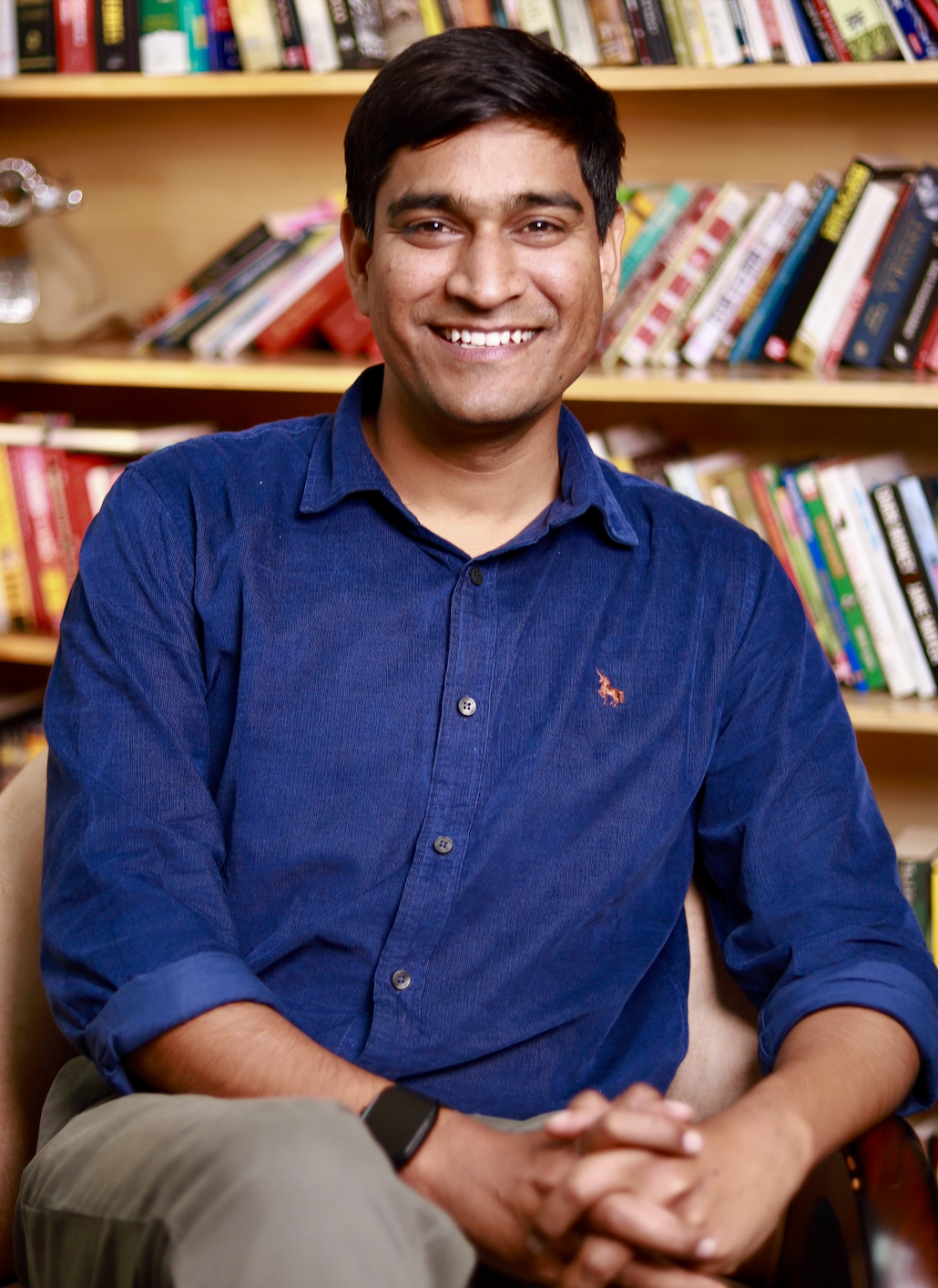
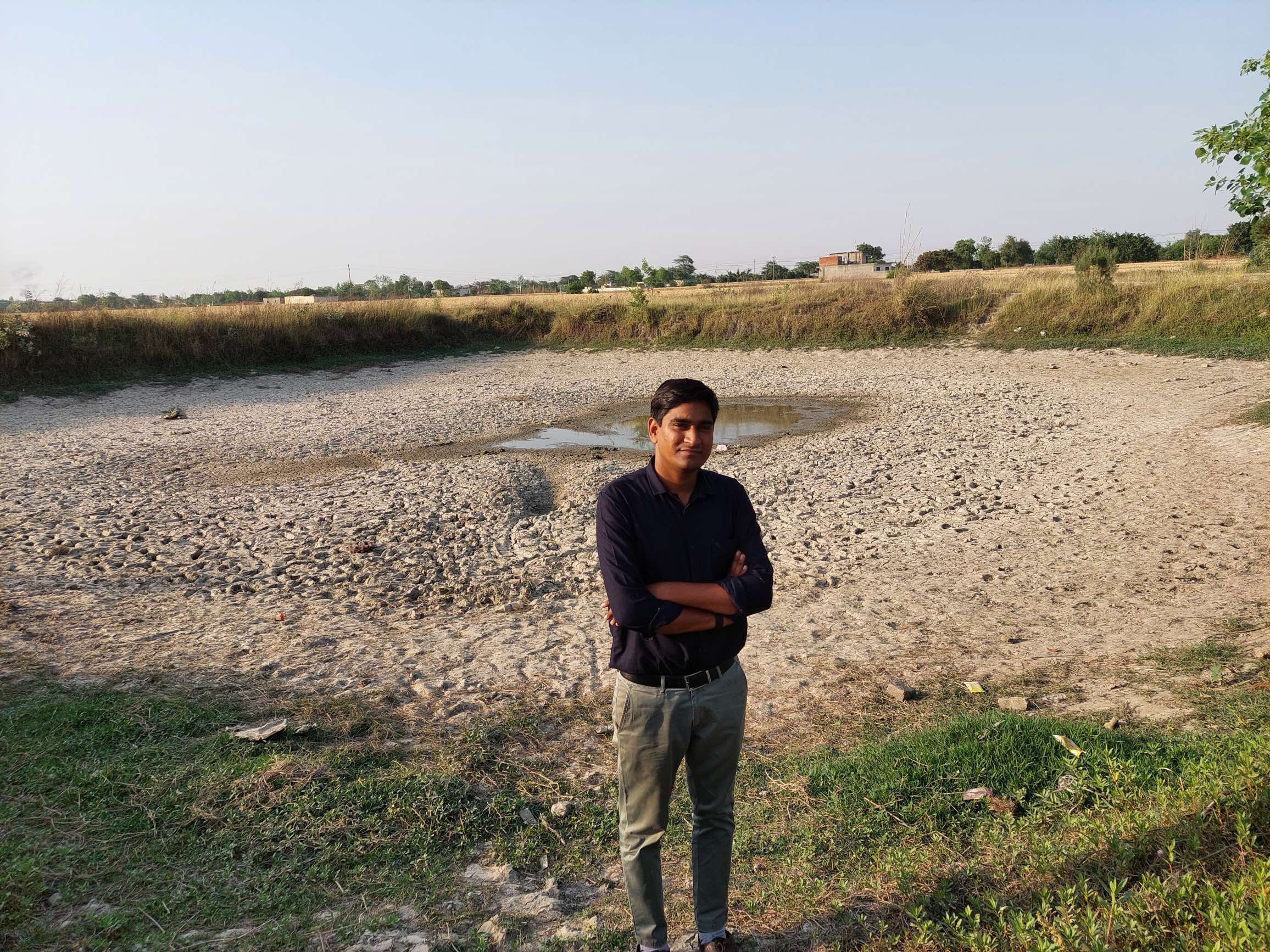
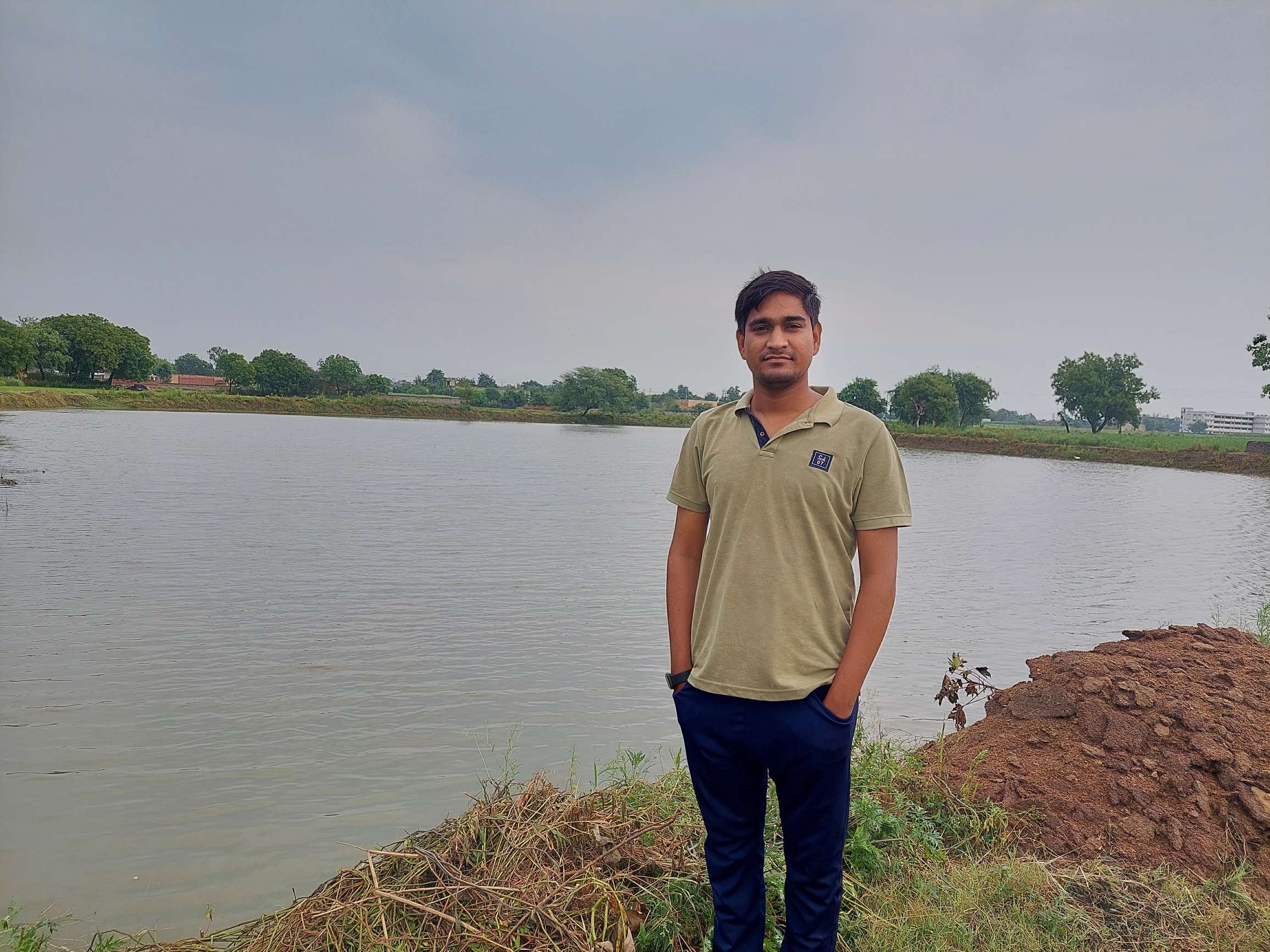
Ramveer Tanwar was born in Dadha village, Gautam Buddha Nagar, Uttar Pradesh. A first-generation learner and youngest of five siblings, he graduated with a B.Tech in Mechanical Engineering from KCC Institute of Technology and Management in 2014.
After joining multinational company Cyient, he watched his childhood ponds turn into garbage dumps. In 2016, he quit his job and dedicated himself to restoring India's dying water bodies. He received training from the Central Pollution Control Board under the Ministry of Environment. He also travelled to Japan to learn advanced pond cleaning techniques.
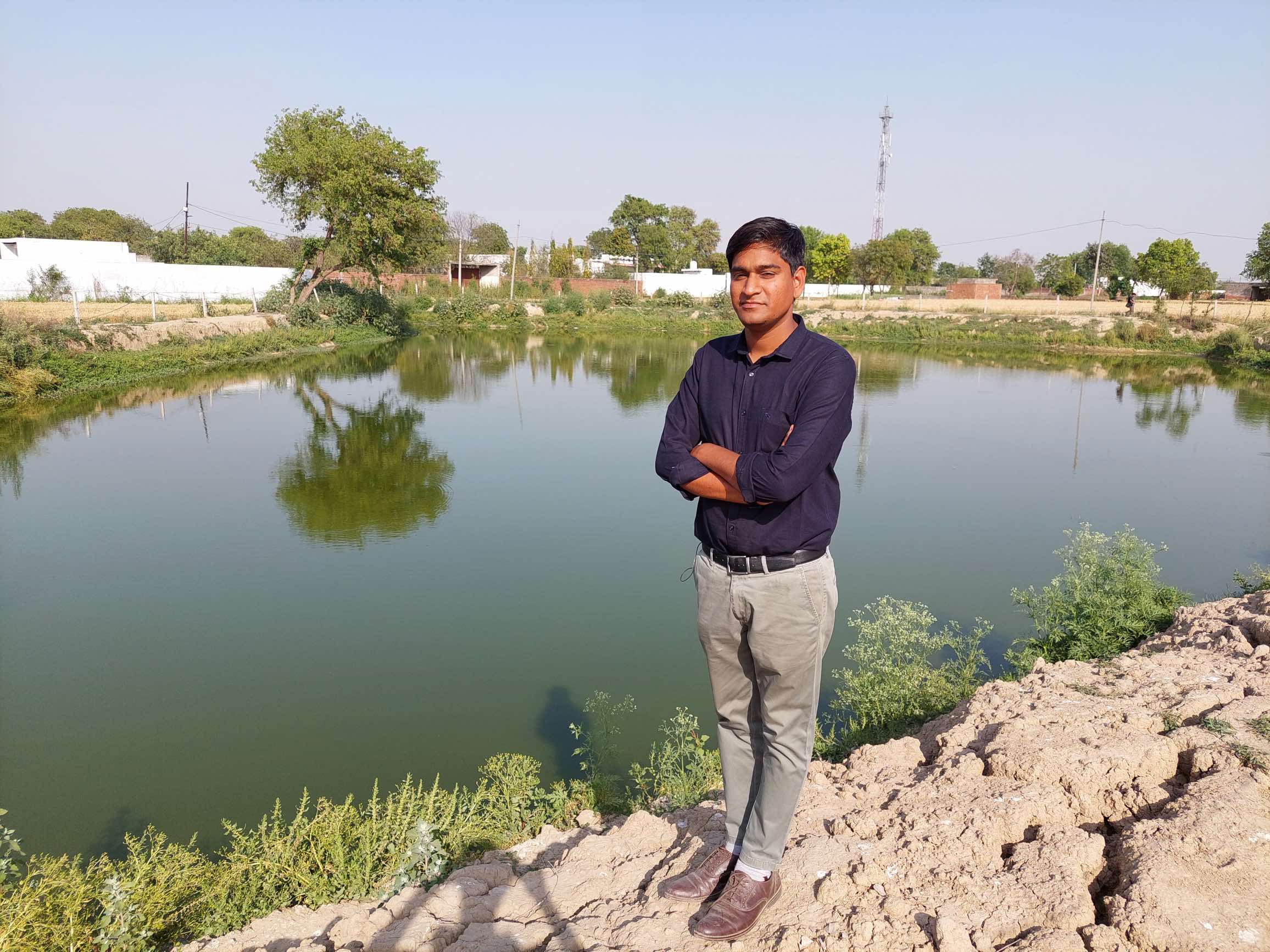
He launched the Jal Chaupal campaign in 2015 and the viral "Selfie with Pond" initiative in 2018. In 2020, he founded Say Earth NGO to scale the movement nationally.
 The Organisation
Say Earth is a non-governmental organization working for the restoration and rejuvenation of ponds and the afforestation of urban and rural landscapes. Backed by a multidisciplinary team using a blend of traditional and modern approaches, its projects contribute to water conservation, pollution abatement, groundwater recharge, climate change mitigation, and livelihood generation — supporting UN SDGs 6, 13, and 14.
Across UP, Uttarakhand, Haryana, MP, Delhi, Gujarat & Karnataka
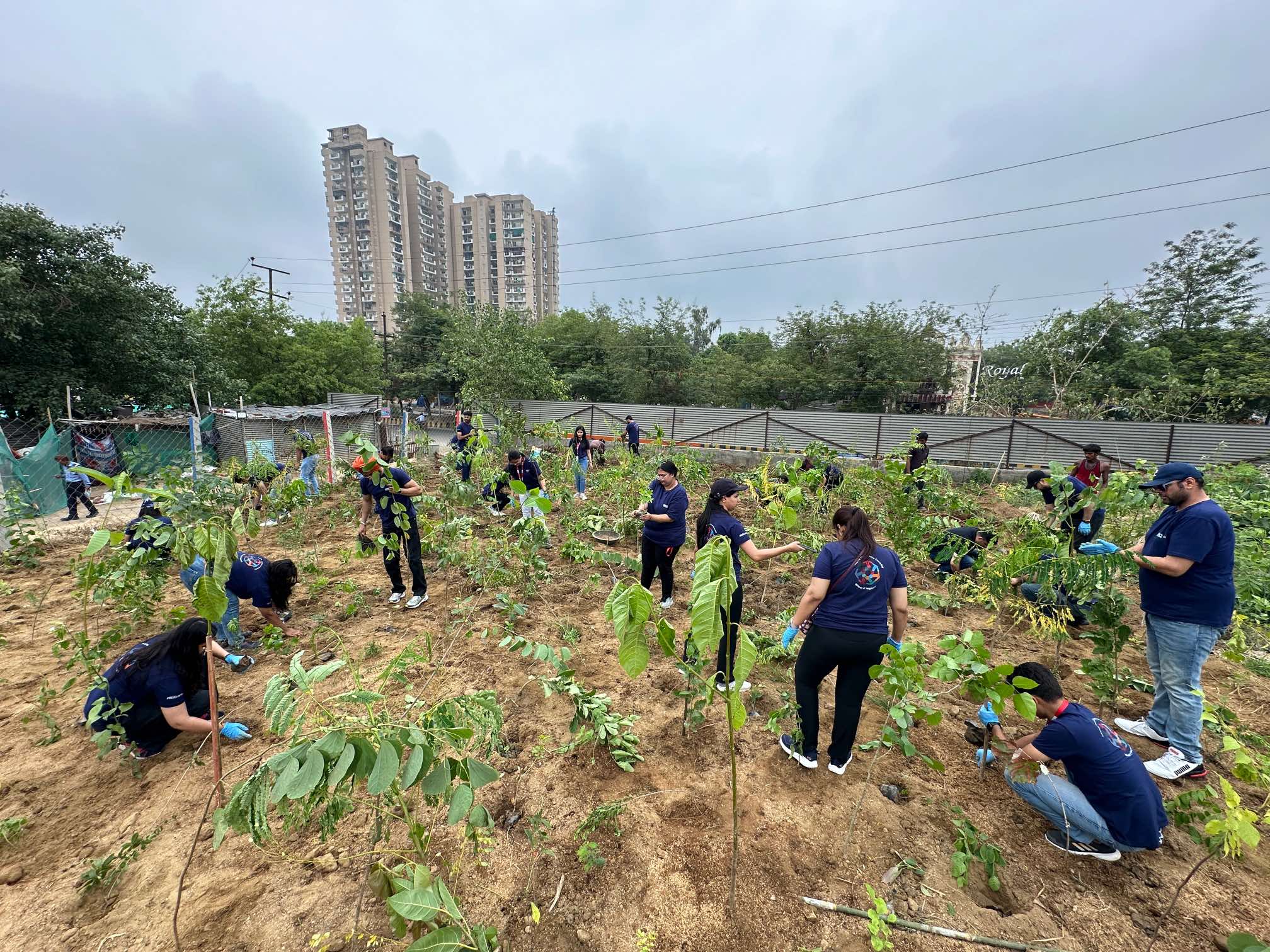
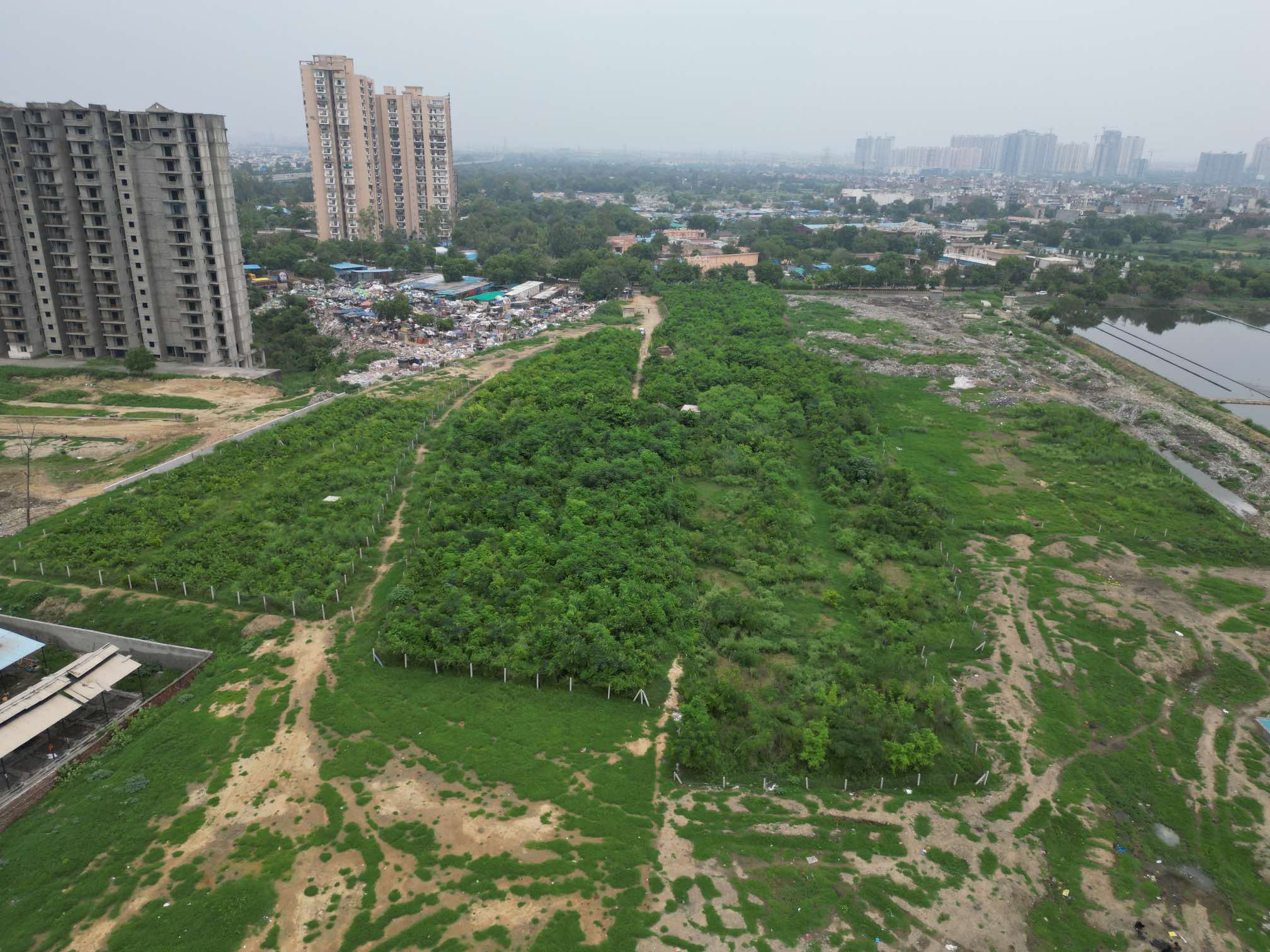
Miyawaki method. 25,000+ saplings at Indirapuram. 35,000+ at Kavinagar
Community dialogues, school workshops, Pond Warriors training nationwide
Including PM Modi's Mann Ki Baat recognition & UN Karmaveer Chakra




















A decade of relentless work — restoring water, reviving communities, inspiring a movement.
Graduated with B.Tech from KCC Institute. Launched the Jal Chaupal campaign from Dadha village to raise awareness about water conservation.
Left his MNC job at Cyient to work full-time on pond restoration. Funded himself through tuitions.
Launched the viral social media campaign engaging youth worldwide. Participation from the US, Canada, and Indonesia.
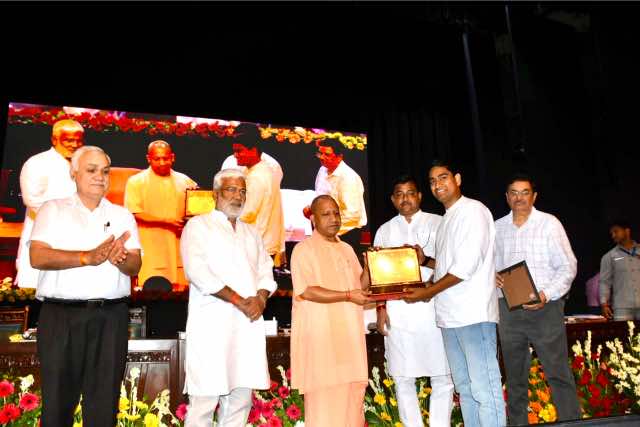
Rex Karmaveer Chakra by UN & iCONGO. Shining World Protection Award from Taiwan ($10,000 grant). TEDx speaker.
Formally established Say Earth NGO. CSR partners HCL Foundation, Green Yatra, and Sleepwell Foundation joined.
PM Modi praised his work on AIR's Mann Ki Baat (82nd episode). 40 ponds restored by this point.
Brand Ambassador for Swachh Bharat Mission. Wetland Champions 2022. NatGeo "One For Change" on Disney+ Hotstar.
Amar Chitra Katha Vol 4. 100th Mann Ki Baat conclave. 6+ urban forests. Neer Dialogue 1.0 at DTU. Euronews documentary.
Partner with PondMan to restore neglected ponds. Each restoration costs ₹2–25 lakhs involving community-driven cleanup, desilting, and ecosystem rehabilitation.
Participate in Jal Chaupal dialogues to learn about groundwater recharge, pollution prevention, rainwater harvesting, and ecological preservation.
Join the "Selfie with Pond" campaign. Help train 100,000 local "Pond Warriors" by 2030. Advocate for water body protection policies.
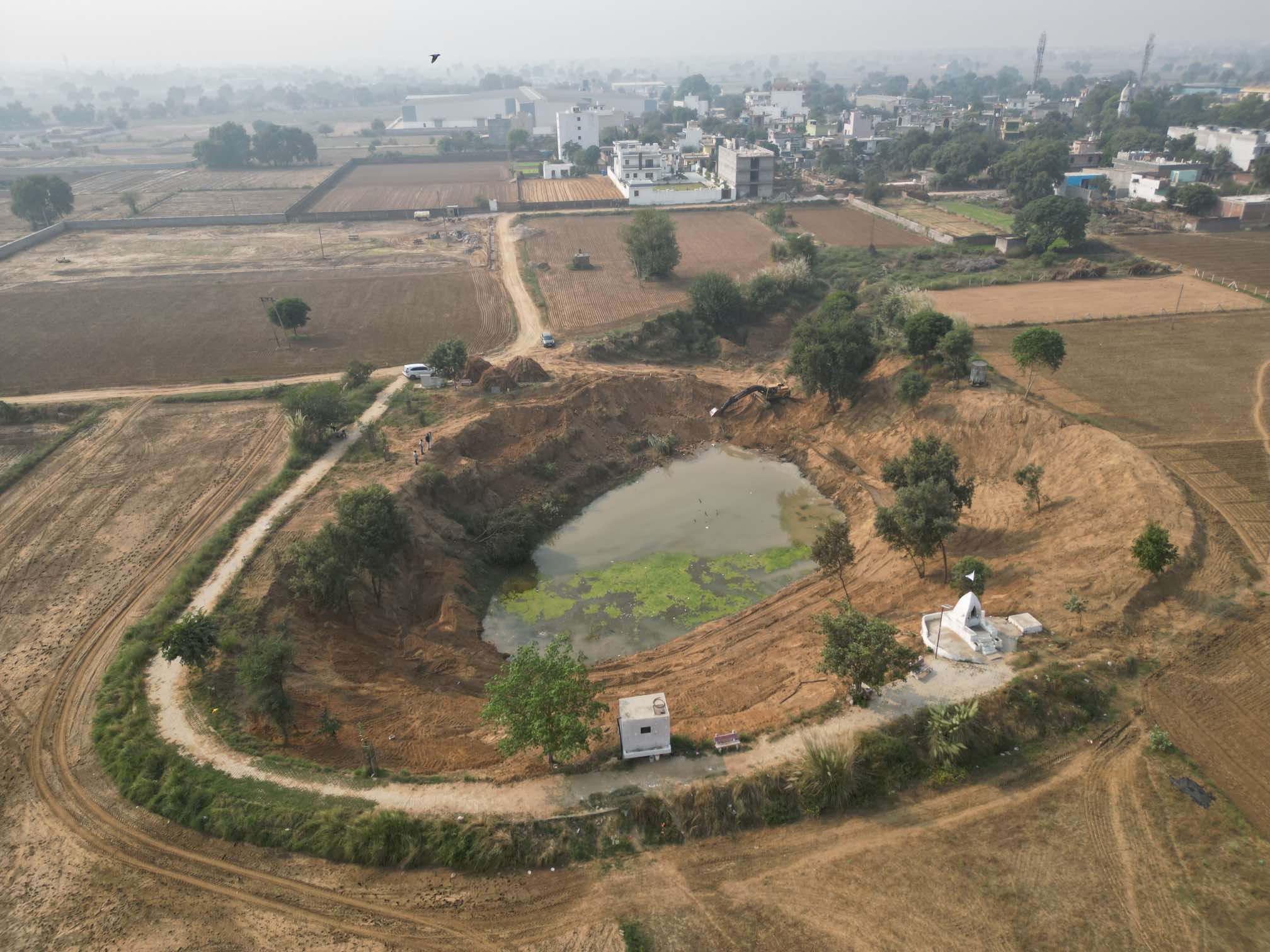
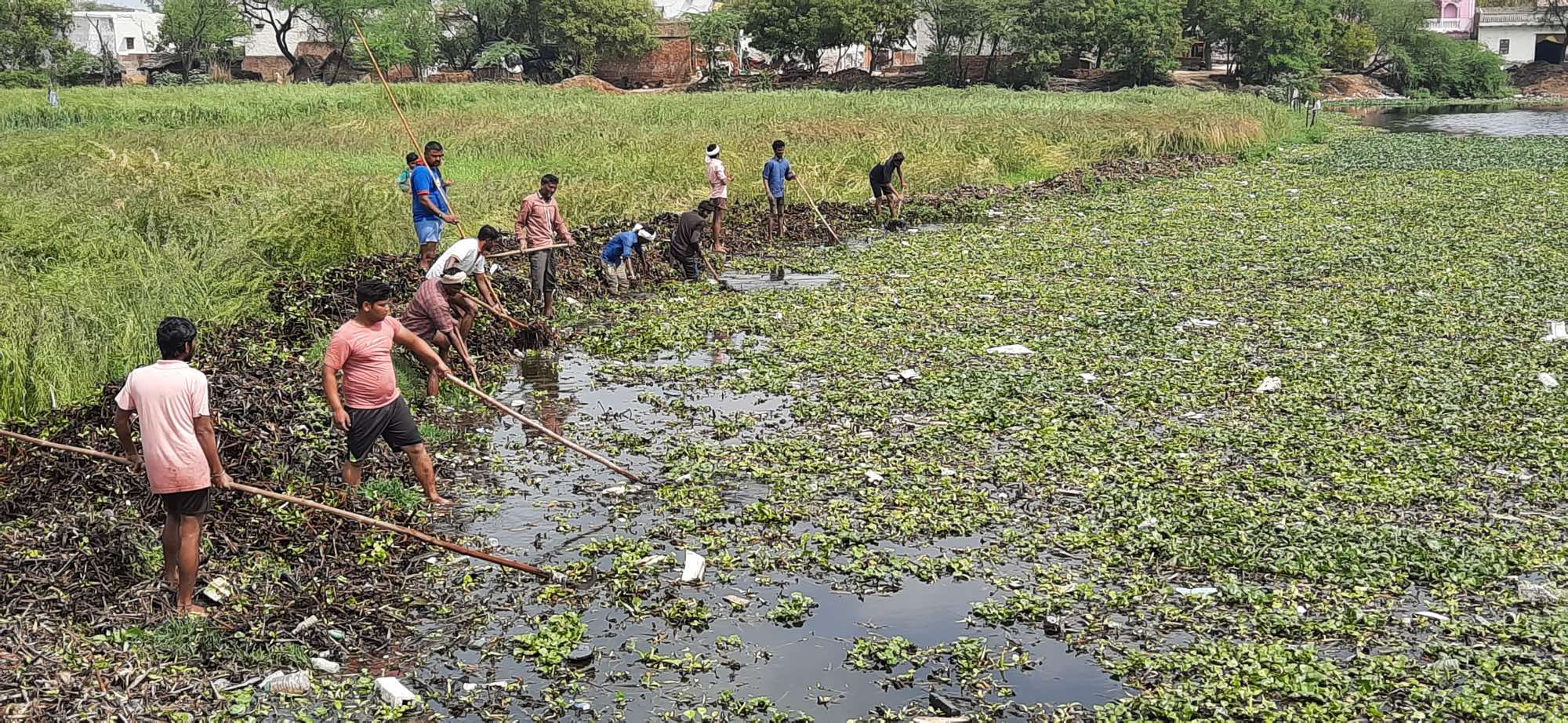
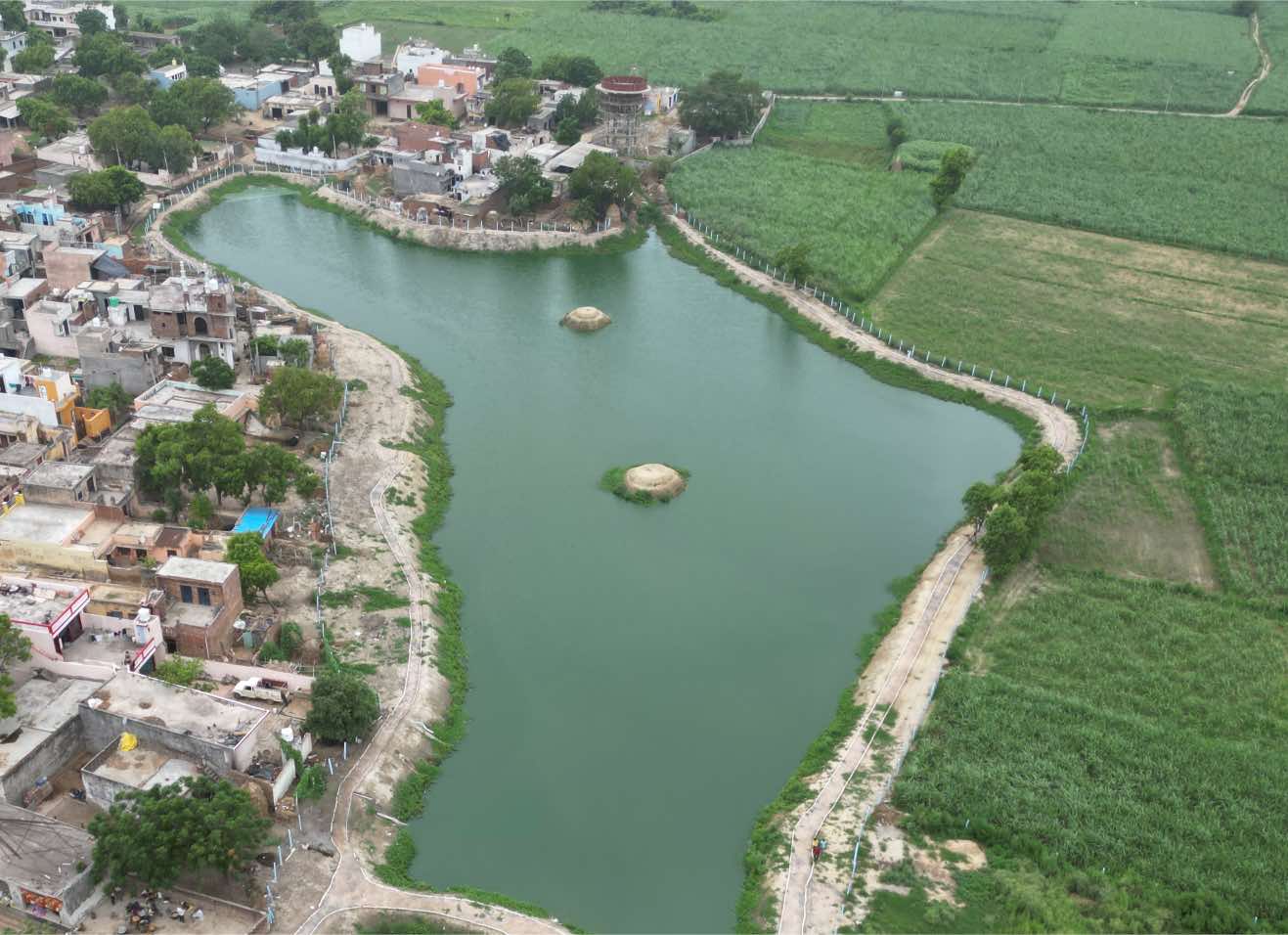
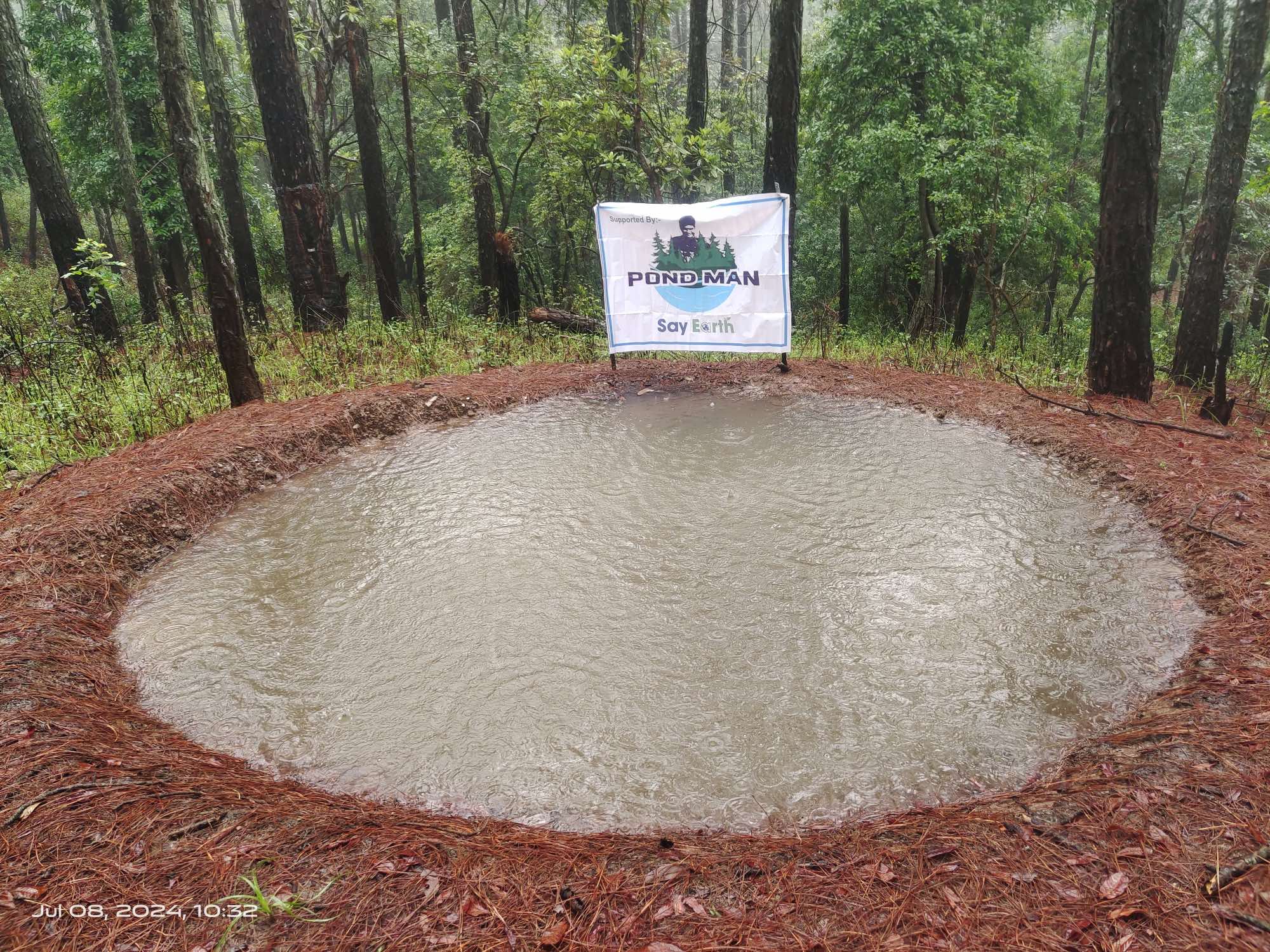
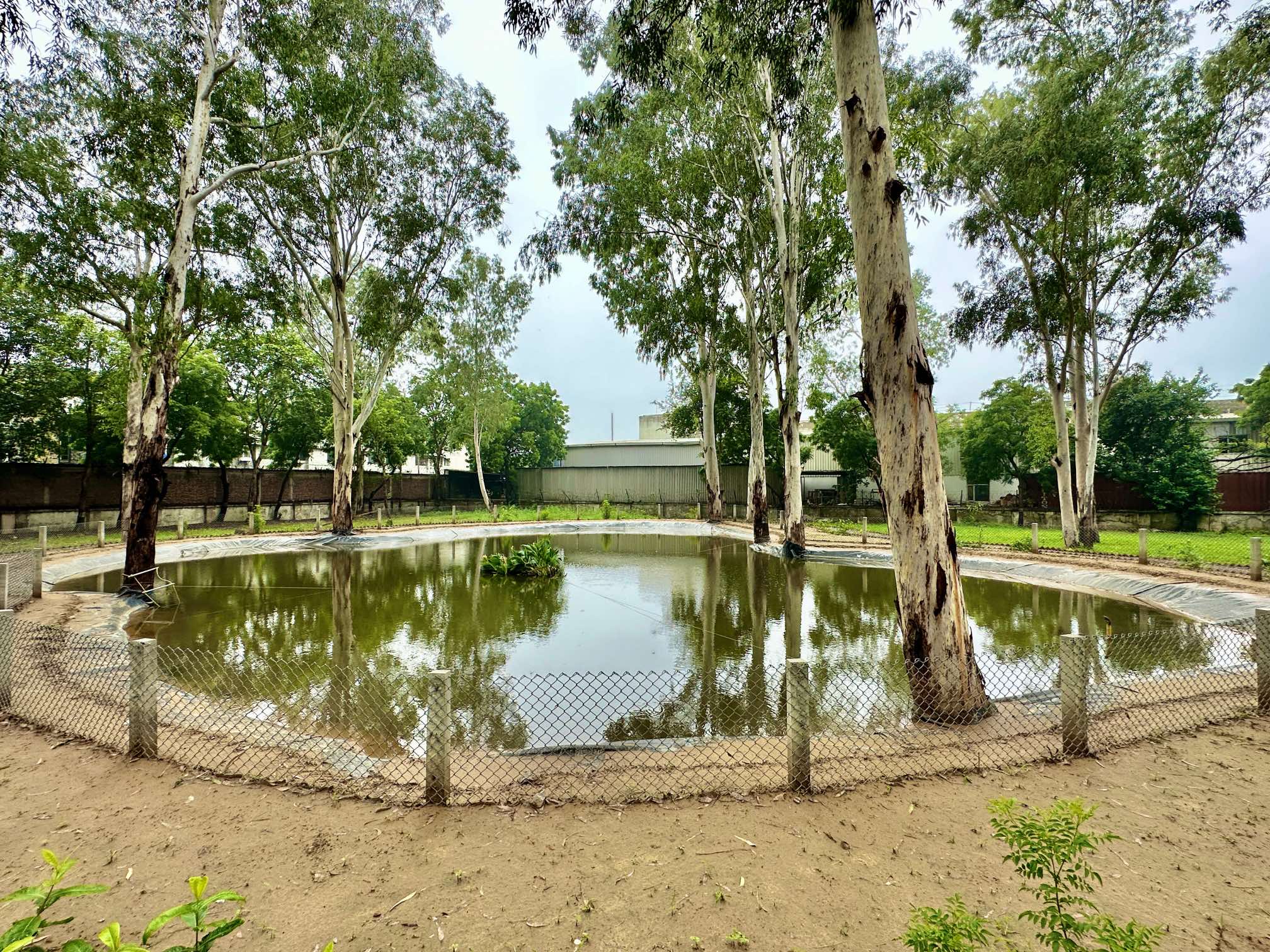
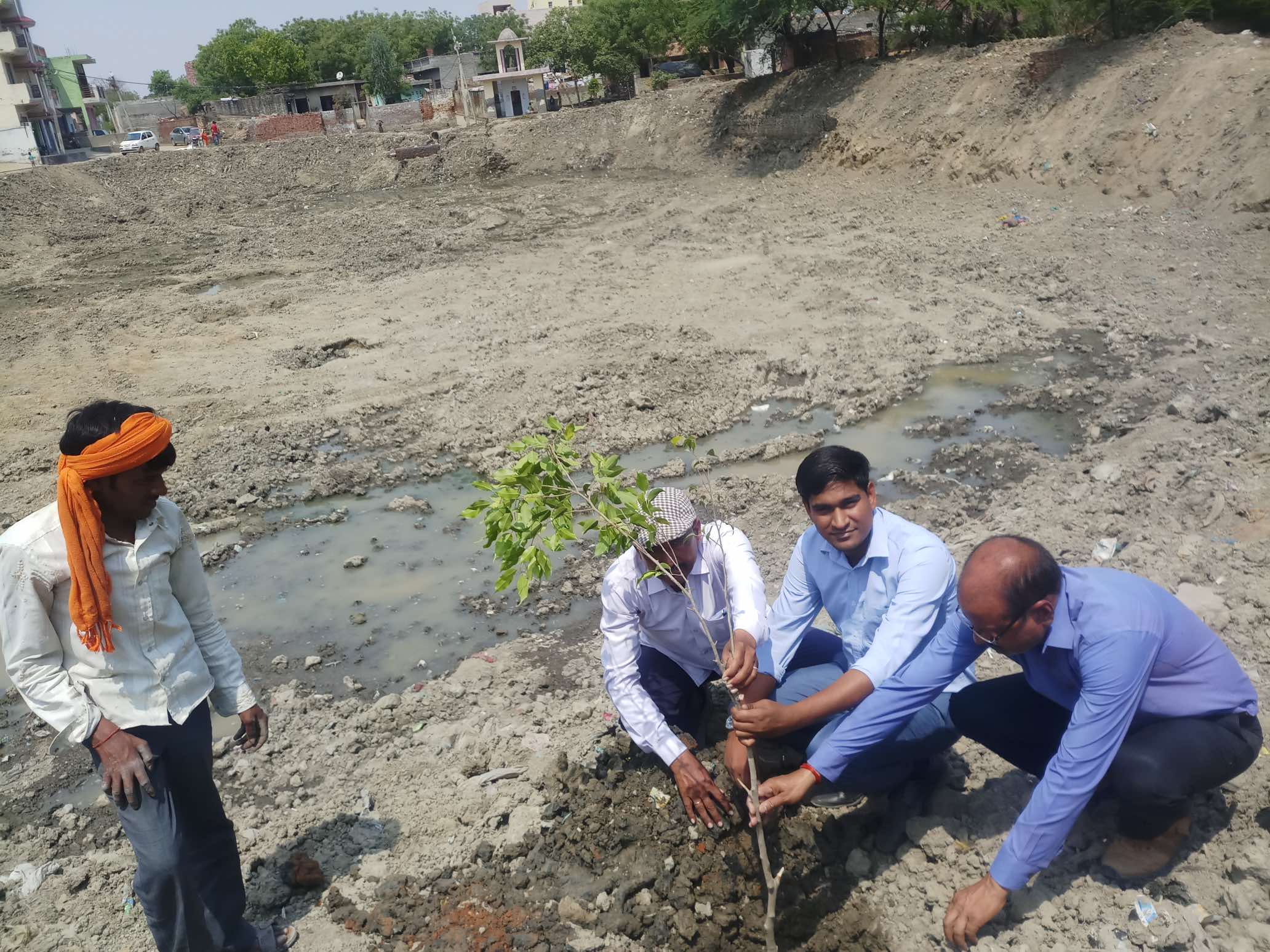
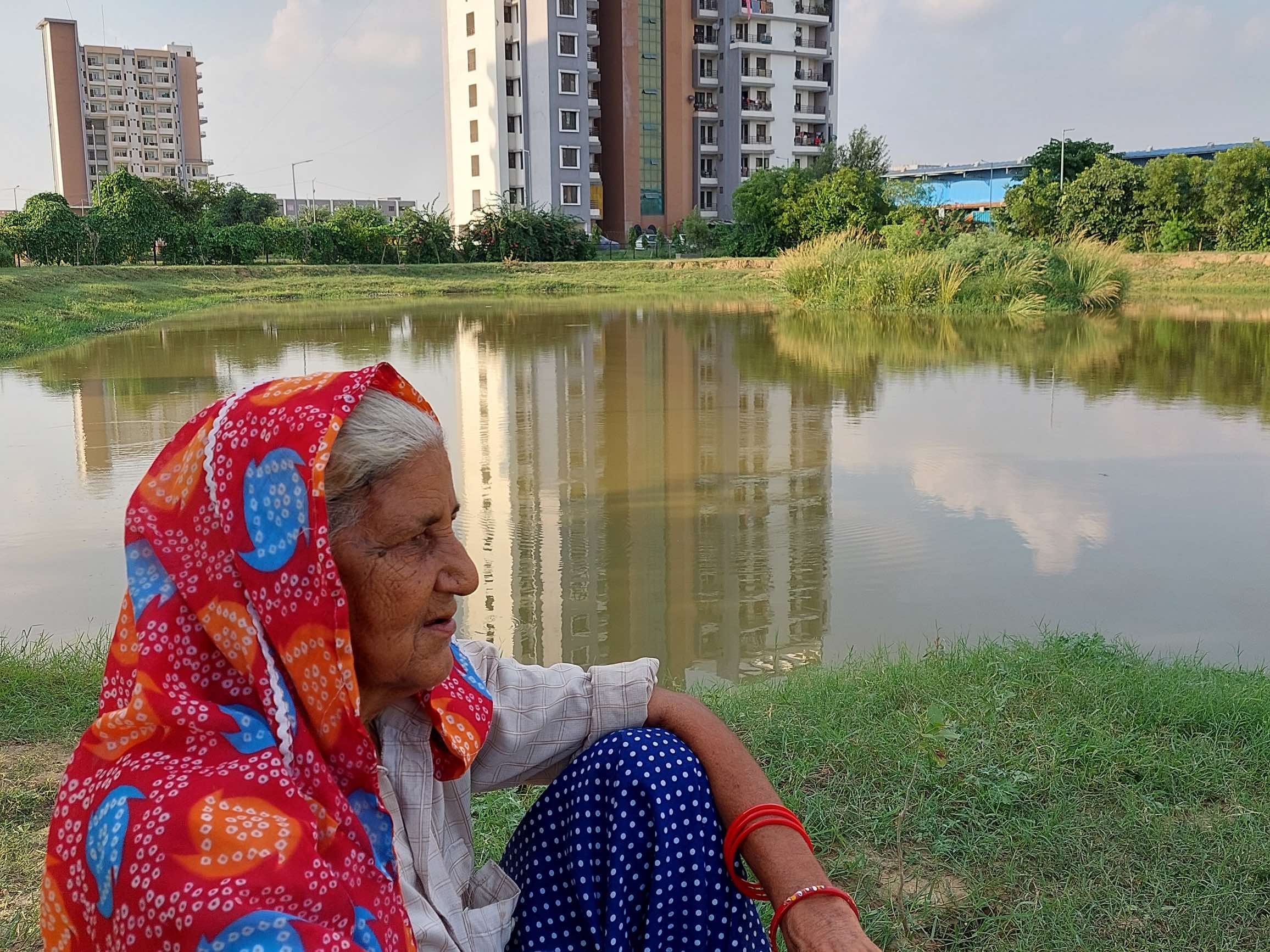
From garbage dumps to thriving ecosystems — see the actual transformations across India.
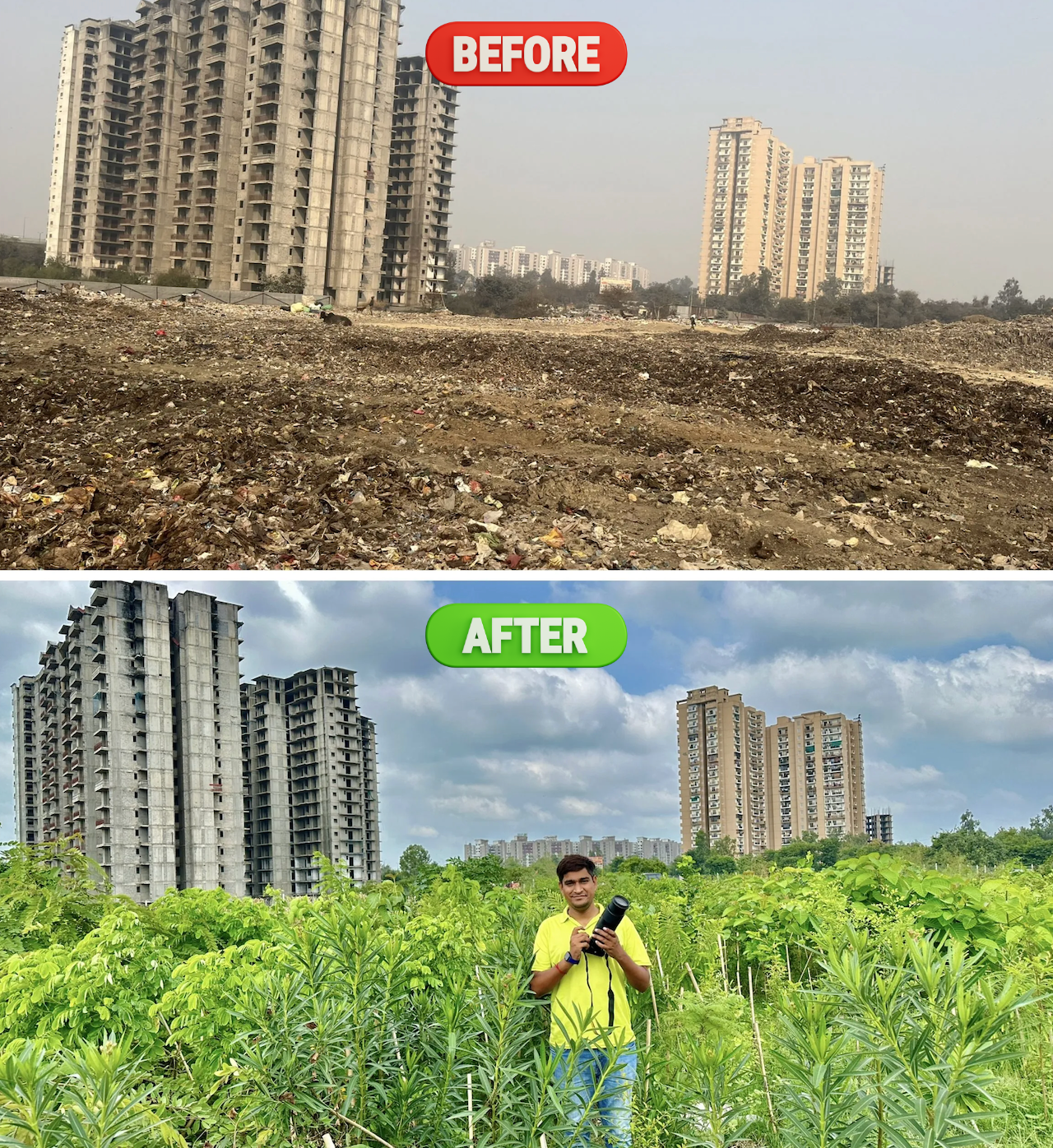
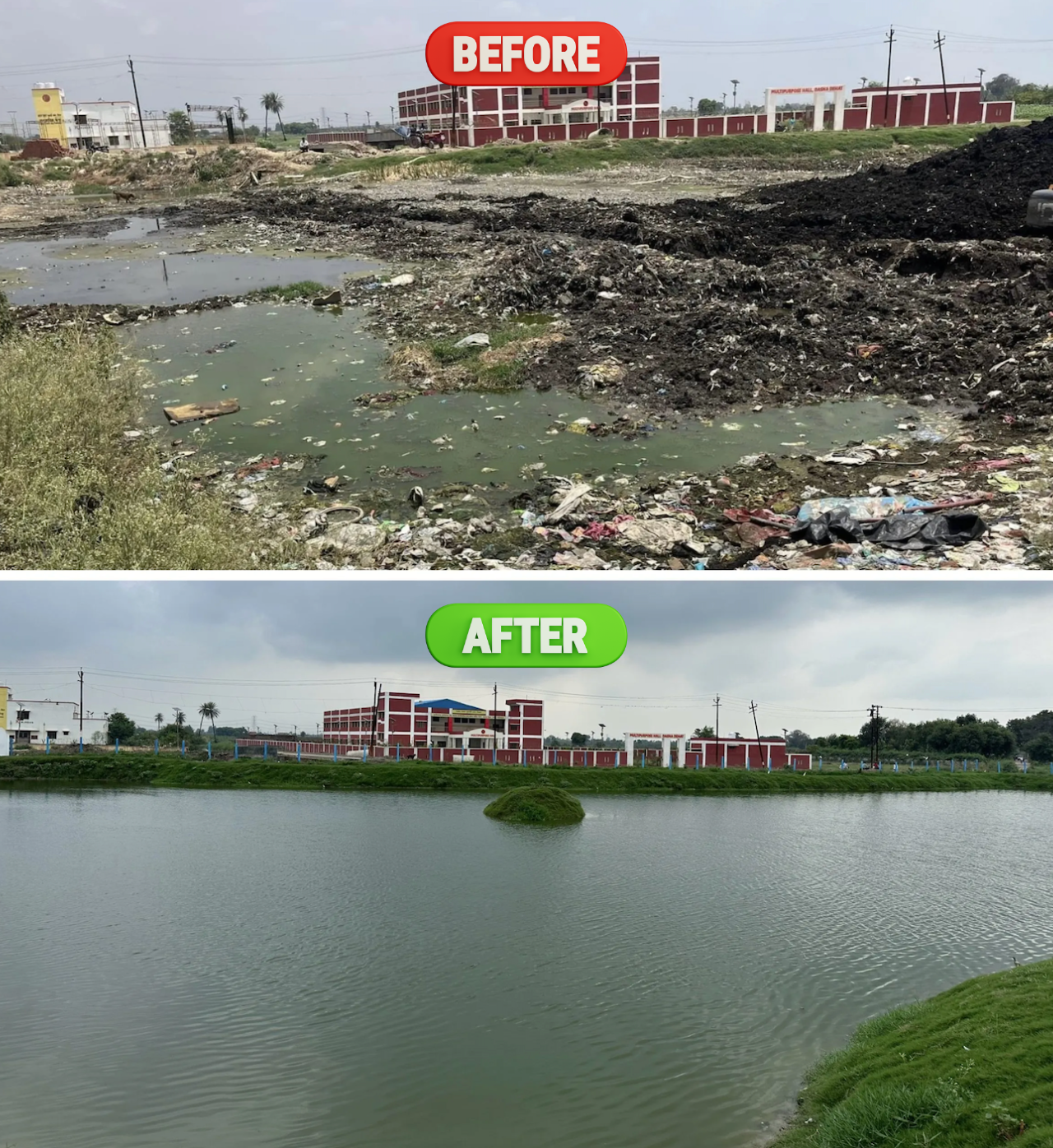
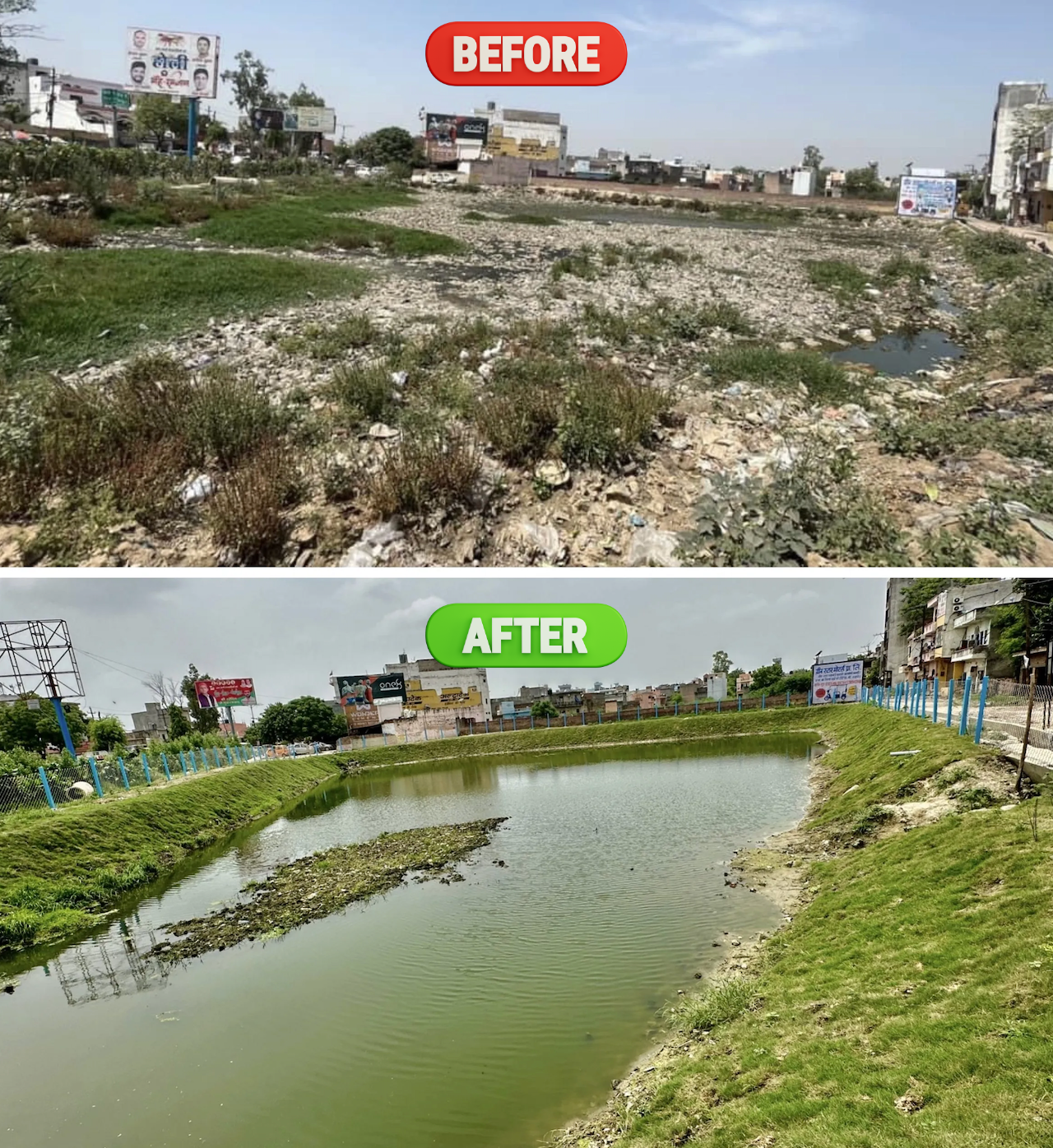
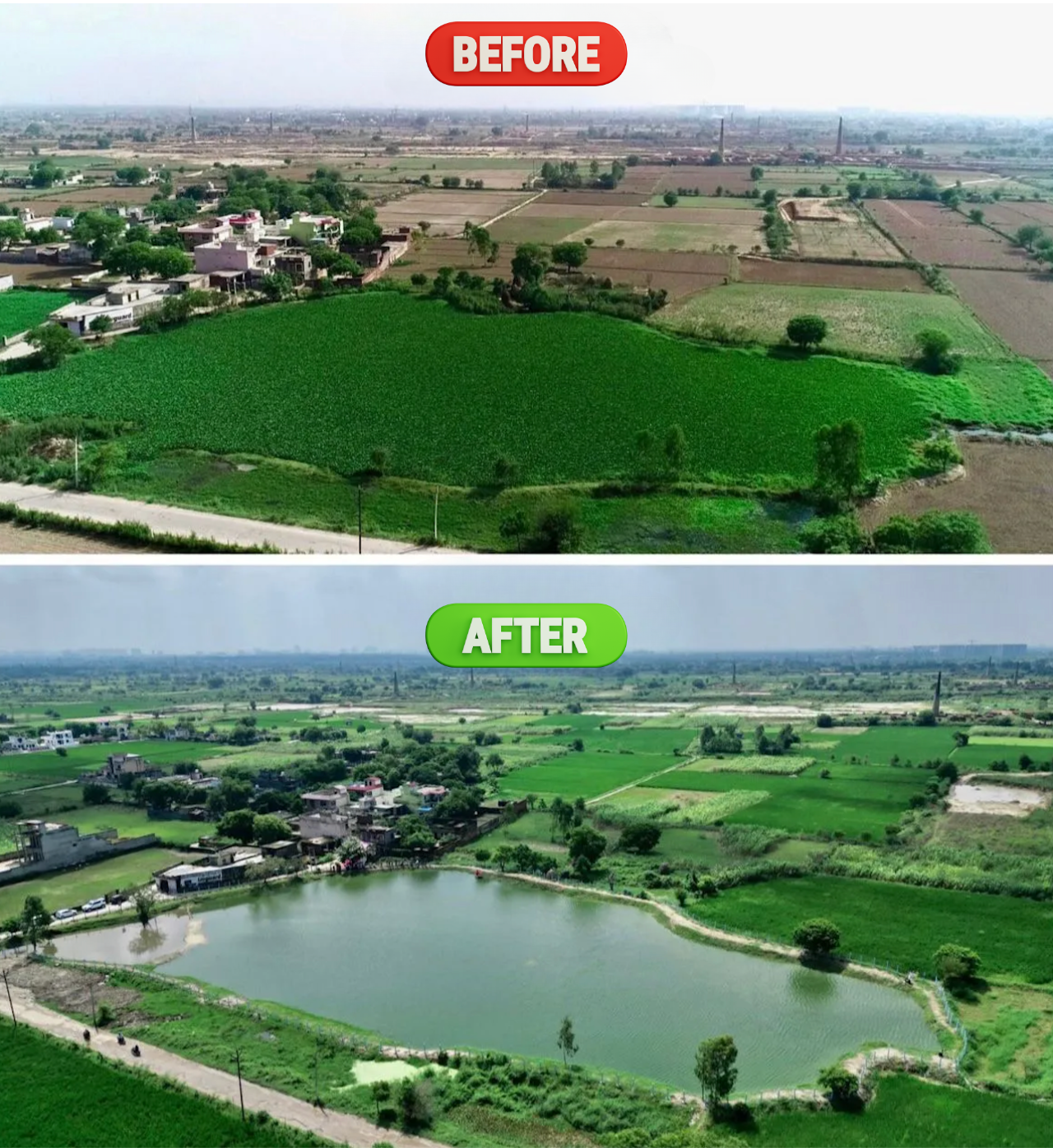
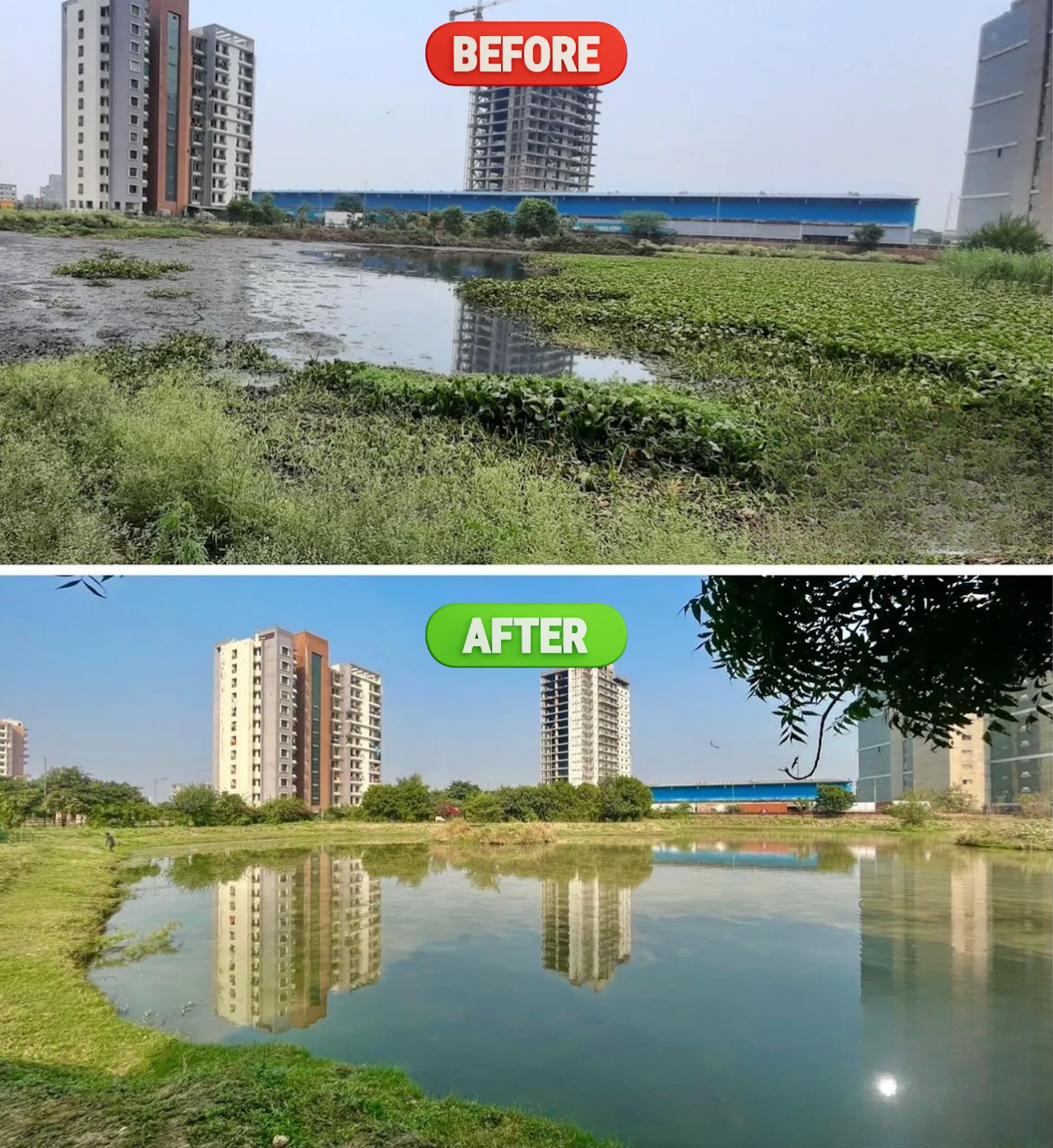
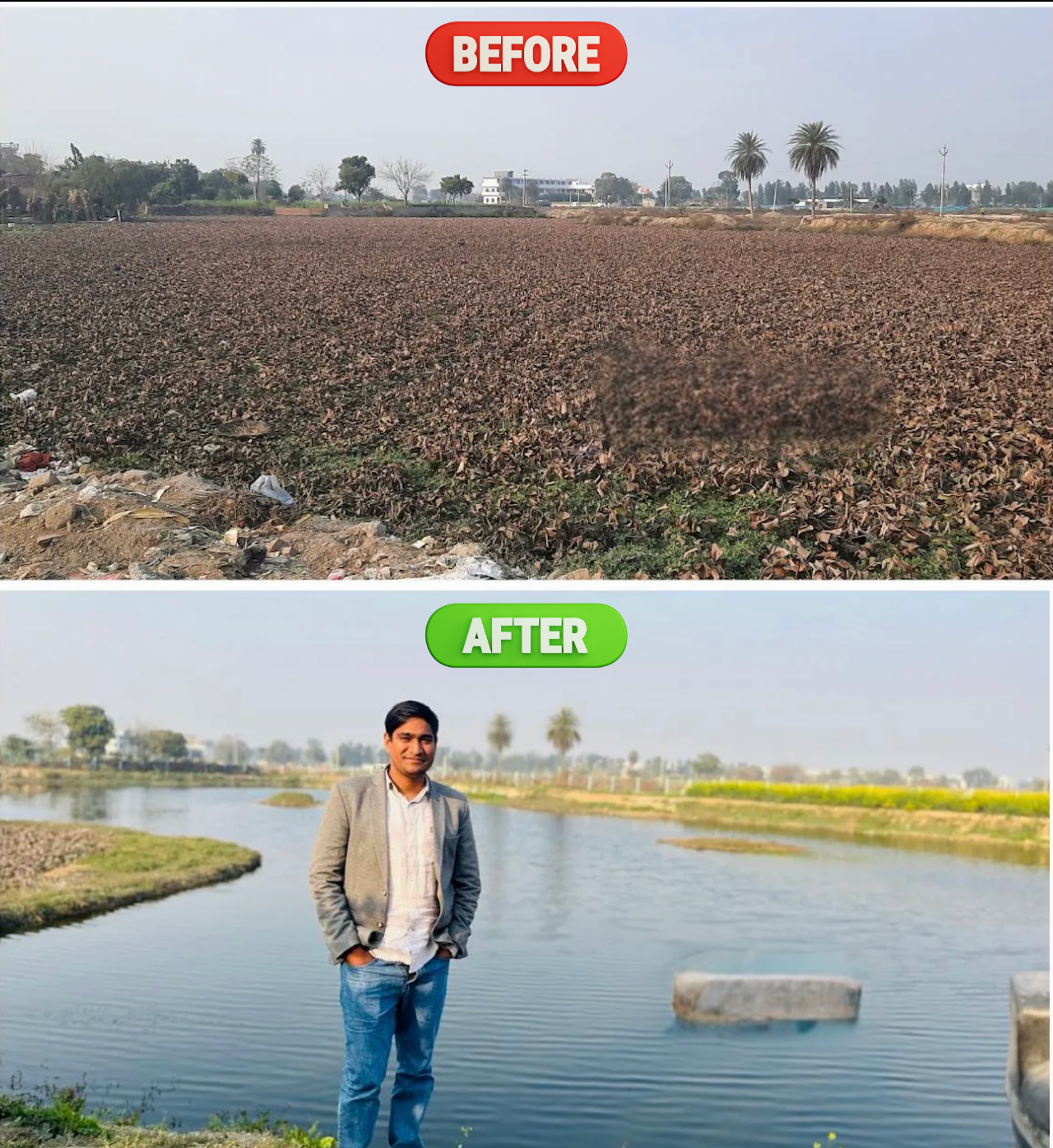
Healthy ponds are vital ecological infrastructure.
Ponds capture rainwater, prevent runoff and erosion, and replenish groundwater supplies for irrigation during dry periods.
Organic matter in pond sediments acts as a carbon sink, locking away CO₂ and helping combat climate change.
Ponds support diverse species — aquatic insects, amphibians, migratory birds — as breeding grounds and wildlife corridors.
Restored ponds support aquaculture, fisheries, lotus and chestnut farming, eco-tourism, and organic cultivation.
Meet locals, survey slope, depth and water retention. Prepare a project report.
Remove solid waste, hyacinth and sludge. Shift polluted water. Clear encroachments.
Enhance water quality. Plant native trees. Restore natural water inflow channels.
Let the pond rest, then hand to gram panchayat for sustainable community management.
Featured in documentaries, news channels, TEDx talks, and national broadcasts.
Nationally and internationally recognized for outstanding contributions to water conservation.
Praised on All India Radio. 1 of 100 national guests for 100th episode conclave at Vigyan Bhawan.
Global civilian honour by the United Nations and iCONGO for environmental courage.
From Taiwan with US$10,000 grant for water conservation efforts.
Presented by Union Minister Bhupender Yadav, Ministry of Environment.
Appointed by Ghaziabad Municipal Corporation for the Swachh Bharat Mission.
India Iconic Award 2021. Jal Prahari Samman 2022. UP State Ground Water Award. Water Hero by Jal Shakti Ministry. Amar Chitra Katha Vol 4. Rastiya Swayamsiddh Samman 2019.
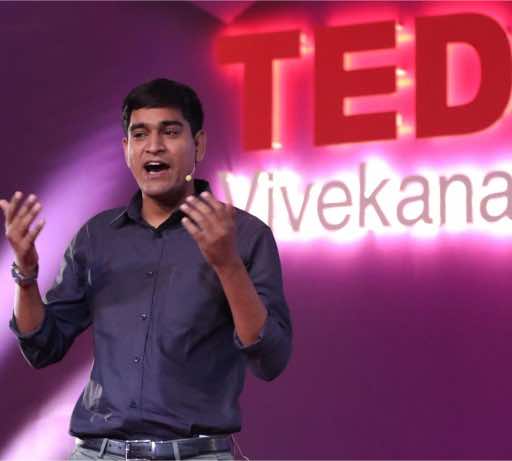
Everything about the Pondman movement and how you can help.
The urgent need to conserve water and revive dying water bodies. India loses thousands of traditional ponds yearly. Through Jal Chaupal dialogues and hands-on restoration, the movement builds emotional connections between communities and water bodies.
The grassroots Jal Chaupal model meets villagers at the pond. The team uses natural materials for restoration, trains local "Pond Warriors," and builds long-term community ownership. Say Earth is known for maximum utilization of natural materials and the Miyawaki technique for urban forests.
Each restoration costs between ₹2 to ₹25 lakhs depending on size and condition. Funded by CSR partnerships (HDFC, HCL Foundation, Technip Energies, Coca-Cola India, Airbus, Accenture), government support, and donations.
Volunteer for cleaning drives, donate to projects, spread awareness via "Selfie with Pond," or adopt a local water body. WhatsApp +91-9310369106 or visit sayearth.org to join.
Proliferation of invasive species, eutrophication, direct dumping of solid waste, silt formation, disturbance of catchment areas, discharge of sewage, encroachment by public and private entities, and construction around ponds.
Want to sponsor a pond, collaborate, or volunteer? Reach out.
110, Dadha Village, Gr Noida, Gautam Budh Nagar, UP - 201310